Research Questionnaire
A structured questionnaire with demographics, scaled items, and open responses, laid out the way a study writes one rather than the way a survey tool defaults to.
Try it in another theme
Powered by Deoochform
Opens in the builder. Nothing is saved until you edit it. Or ask Claude or ChatGPT to build it.
- Fields
- 13 questions
- Layout
- Classic, every question on one page
- Theme
- Slate, switchable in the preview
- Updated
- 10 September 2026
Categories
- Education form templates
- Questionnaires
- Research Forms
- Education Forms
Form type
Ideal for
- Academic researchers
- PhD students
- UX researchers
- Policy teams
Best used in
- Studies
- Course evaluation
- User research
About this template
A questionnaire and a survey get built with the same tools and are not the same instrument. A survey collects opinions. A questionnaire is designed to be analysed: the scales run in the same direction, the demographics use bands rather than free text, and the open questions sit at the end so they do not colour the scaled answers that come before them. This template is laid out the way a study writes one.
One item is deliberately worded in the opposite direction to the others. A reversed item is the standard way to catch straightlining, which is when somebody selects the same point down the whole column without reading, and it costs one question to have a way of spotting responses you should discard.
Age and education are bands rather than open fields because banded data is what you can actually group and report on, and because a birth year is more identifying than an age range in a study that promised anonymity. Gender includes a self describe option and a prefer not to say, both of which belong on any form that asks.
Replace the three statements with your own items, keep them pointing the same way apart from one reversal, and set the follow up question to match what your ethics approval allows.
Templates are a starting point, not legal or professional advice. Where a form carries consent, medical, or contractual wording, have somebody qualified review it against the rules that apply to you before you publish.
Fields in this template
- Participant number, if you were given oneShort text
- Age*Dropdown
- GenderDropdown
- If you prefer to self describeShort text
- Highest level of education completedDropdown
- I feel confident using the system described above*Opinion scale
- I found the process straightforward*Opinion scale
- I would need support to use it again*Opinion scale
- How often do you do this at present?*Single choice
- What worked well?*Long text
- What would you change?*Long text
- May we contact you about a follow up interview?Single choice
- Email address, if you answered yesEmail
Every field can be renamed, reordered, made optional, or removed once the template is open in the builder.
Build this form by asking Claude or ChatGPT
Connect Deoochform to Claude, ChatGPT, or any assistant that supports MCP, then send it the message below. It creates the research questionnaire from this template in your account and replies with a link. You can ask it to add, remove, or reword questions in the same chat before you share the form.
Make me a form in Deoochform from your Research Questionnaire template, then send me the link to share.
New to this? See how to connect your assistant. You sign in with your browser, so there is no key to copy.
Frequently asked questions
- What is the difference between a questionnaire and a survey?
- In practice a survey is any set of questions put to a group, while a questionnaire is an instrument designed so the answers can be analysed together. That means consistent scales, banded demographics, and a deliberate question order. You can build either with the same tool; the difference is in how the questions are constructed rather than in the software.
- Why is one of the statements worded backwards?
- To catch people answering without reading. Somebody selecting the same point down every row will contradict themselves on a reversed item, which gives you a defensible reason to exclude that response. It is one question and it protects the rest of the data, which is why the technique is standard in survey design.
- Can respondents stay anonymous?
- Yes. Nothing on this questionnaire identifies anyone unless they choose to give an email address at the very end for a follow up interview, and that question is optional. If your study requires full anonymity, remove the follow up section entirely rather than relying on people leaving it blank.
Related templates
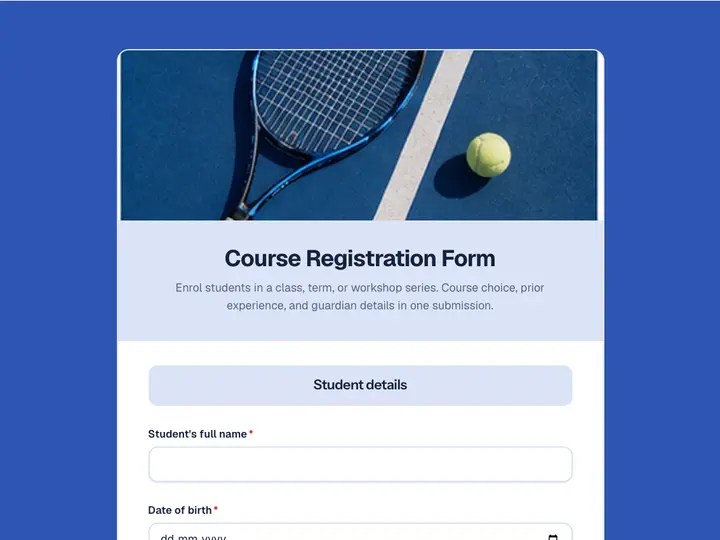 Course Registration Form
Enrol students in a class, term, or workshop series. Course choice, prior experience, and guardian details in one submission.
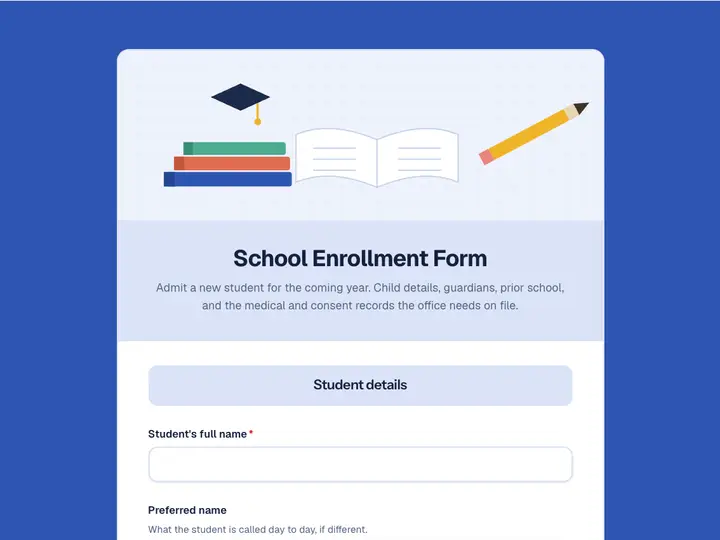 School Enrollment Form
Admit a new student for the coming year. Child details, guardians, prior school, and the medical and consent records the office needs on file.
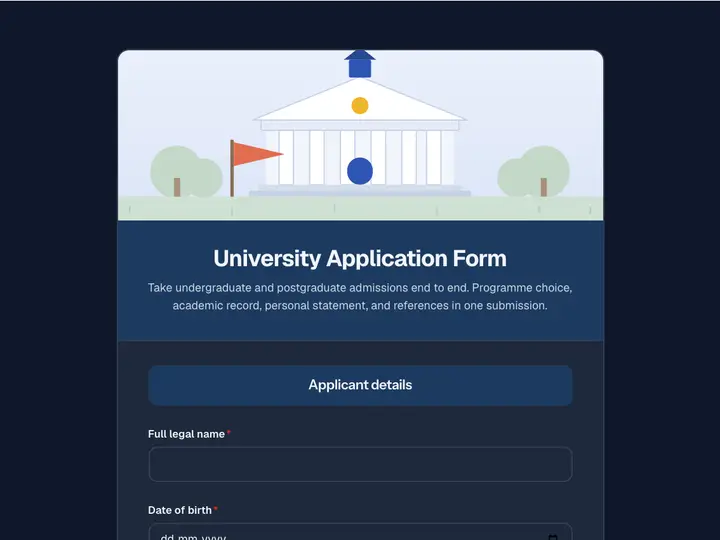 University Application Form
Take undergraduate and postgraduate admissions end to end. Programme choice, academic record, personal statement, and references in one submission.
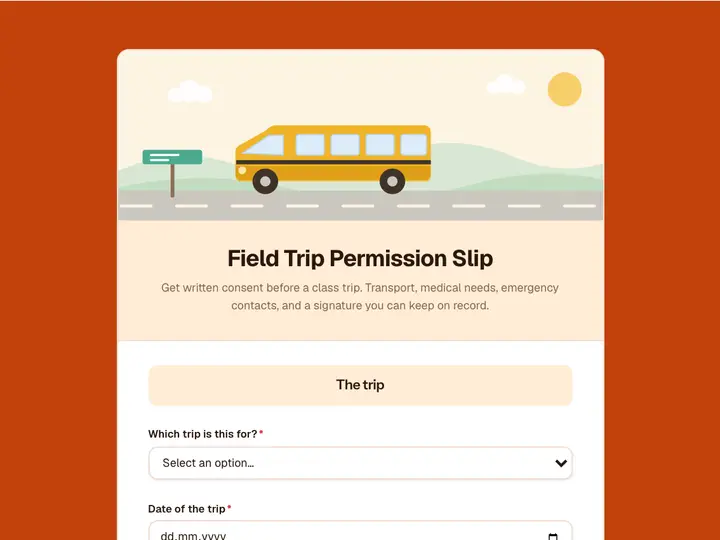 Field Trip Permission Slip
Get written consent before a class trip. Transport, medical needs, emergency contacts, and a signature you can keep on record.
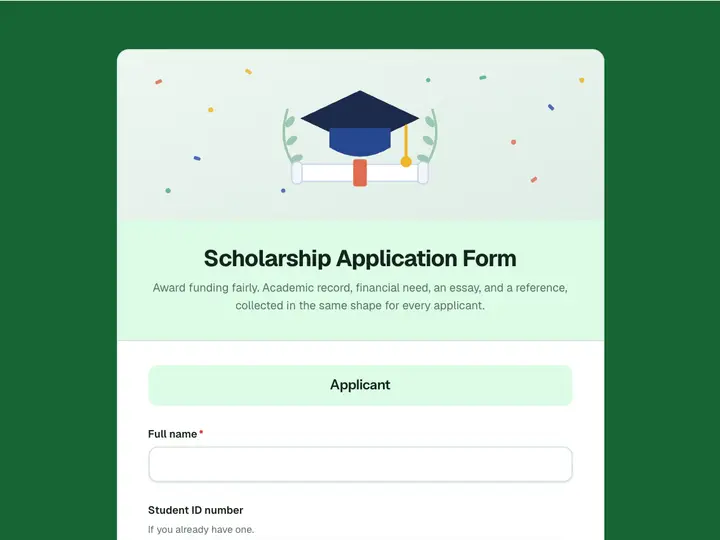 Scholarship Application Form
Award funding fairly. Academic record, financial need, an essay, and a reference, collected in the same shape for every applicant.
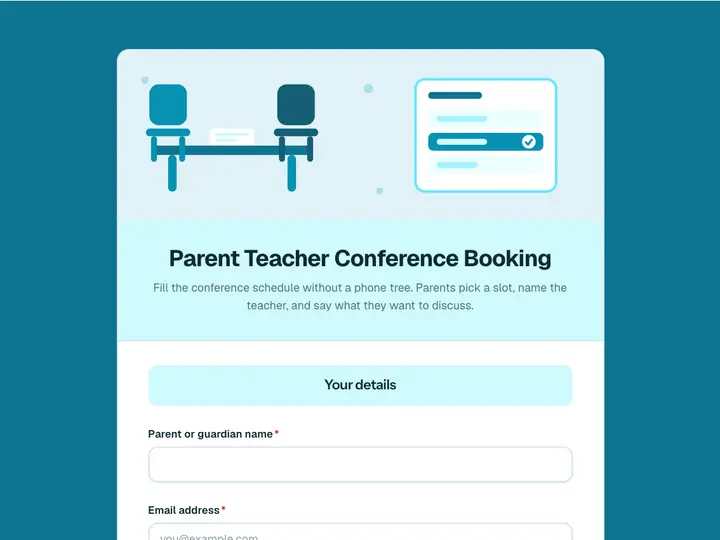 Parent Teacher Conference Booking
Fill the conference schedule without a phone tree. Parents pick a slot, name the teacher, and say what they want to discuss.