Interview Assessment Form
A scorecard every interviewer fills in the same way, so a hiring decision rests on comparable notes rather than on who remembers the room best.
Try it in another theme
Powered by Deoochform
Opens in the builder. Nothing is saved until you edit it. Or ask Claude or ChatGPT to build it.
- Fields
- 14 questions
- Layout
- Classic, every question on one page
- Theme
- Ink, switchable in the preview
- Updated
- 10 September 2026
Categories
- HR form templates
- Assessment Forms
- HR Forms
- Hiring Forms
Ideal for
- Hiring managers
- Recruiters
- Interview panels
- HR teams
Best used in
- Interview loops
- Panel debriefs
- Structured hiring
About this template
The problem this solves is not that interviewers lack opinions, it is that they record them differently. One writes three paragraphs, another writes good, and a week later a hiring decision is made by comparing the two. A scorecard with the same four scales and the same three questions makes the notes comparable, which is the only thing that lets you say one candidate did better than another and mean it.
The strengths field asks for evidence rather than impressions on purpose, with a placeholder saying so. Something they said or did survives scrutiny later. Came across well does not, and it is the kind of note that turns out to have been about something other than the job.
The confirmation at the bottom is the field that matters most and looks least important. Interviewers who talk before writing converge on each other rather than on the candidate, so submitting first and discussing afterwards is what keeps four opinions from collapsing into one loud one.
Change the four scales to the competencies you actually hire against, and add a page break before the decision section if you want interviewers to score before they see the recommendation options.
Templates are a starting point, not legal or professional advice. Where a form carries consent, medical, or contractual wording, have somebody qualified review it against the rules that apply to you before you publish.
Fields in this template
- Candidate name*Short text
- Role applied for*Short text
- Interviewer name*Short text
- Interview date*Date
- Interview stage*Dropdown
- Skill and experience for this role*Opinion scale
- Communication*Opinion scale
- Problem solving*Opinion scale
- Ways of working*Opinion scale
- What did they show evidence of?*Long text
- What are your concerns?*Long text
- What should the next interviewer probe?Long text
- Your recommendation*Single choice
- Please confirm*Multiple choice
Every field can be renamed, reordered, made optional, or removed once the template is open in the builder.
Build this form by asking Claude or ChatGPT
Connect Deoochform to Claude, ChatGPT, or any assistant that supports MCP, then send it the message below. It creates the interview assessment form from this template in your account and replies with a link. You can ask it to add, remove, or reword questions in the same chat before you share the form.
Make me a form in Deoochform from your Interview Assessment Form template, then send me the link to share.
New to this? See how to connect your assistant. You sign in with your browser, so there is no key to copy.
Frequently asked questions
- Why ask interviewers to submit before the debrief?
- Because opinions formed in a group converge on whoever speaks first and most confidently, which is a fact about meetings rather than about candidates. Collecting each interviewer's scores and evidence before anyone compares notes means the debrief starts from four independent readings instead of one shared one.
- Can several interviewers fill this in for the same candidate?
- Yes, that is the intended use. Each interviewer submits their own response, and the submissions table shows them side by side under the candidate name. Sort by candidate to read a whole panel together, and export the set if your applicant tracking system is where the decision is recorded.
Related templates
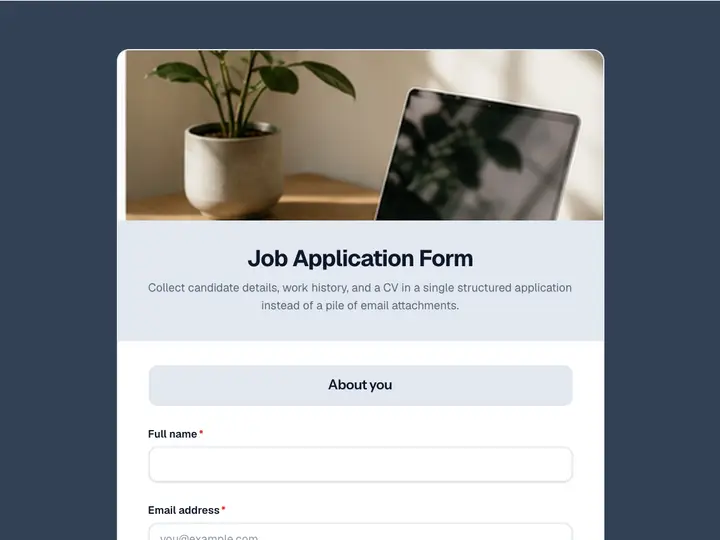 Job Application Form
Collect candidate details, work history, and a CV in a single structured application instead of a pile of email attachments.
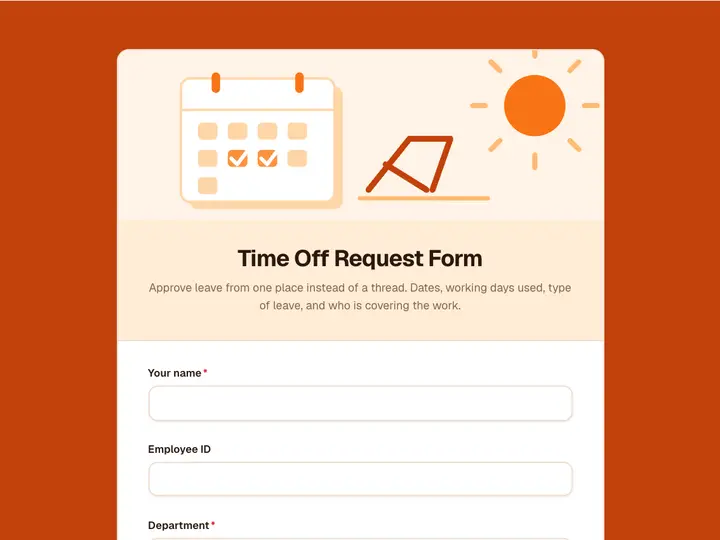 Time Off Request Form
Approve leave from one place instead of a thread. Dates, working days used, type of leave, and who is covering the work.
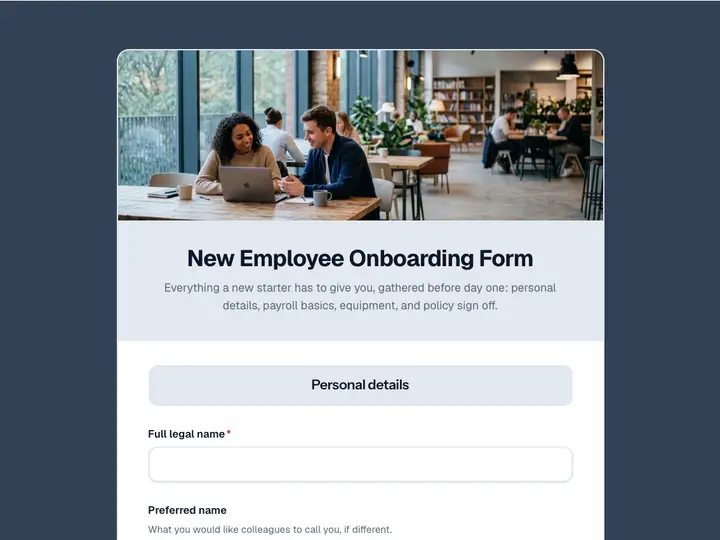 New Employee Onboarding Form
Everything a new starter has to give you, gathered before day one: personal details, payroll basics, equipment, and policy sign off.
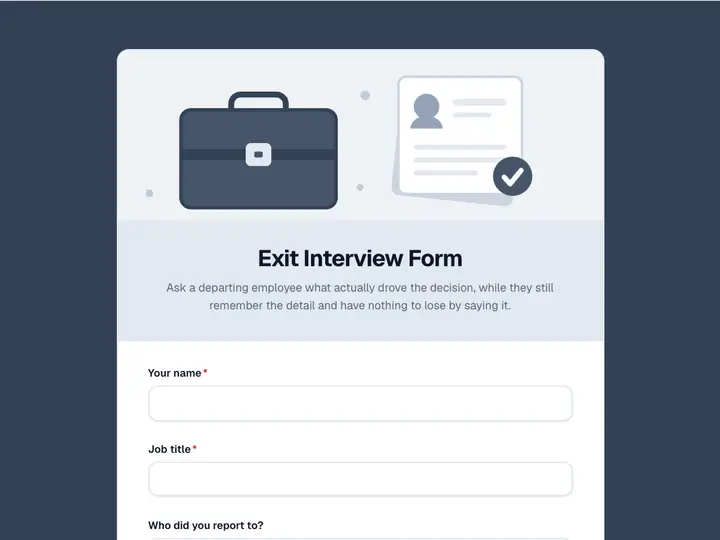 Exit Interview Form
Ask a departing employee what actually drove the decision, while they still remember the detail and have nothing to lose by saying it.
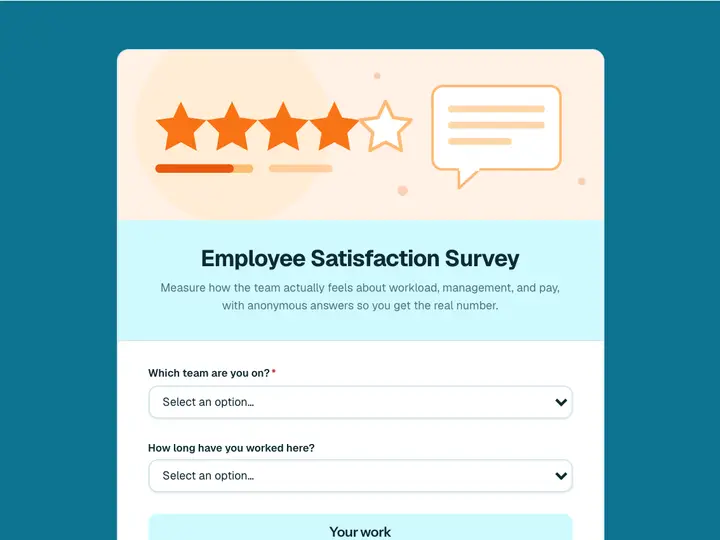 Employee Satisfaction Survey
Measure how the team actually feels about workload, management, and pay, with anonymous answers so you get the real number.
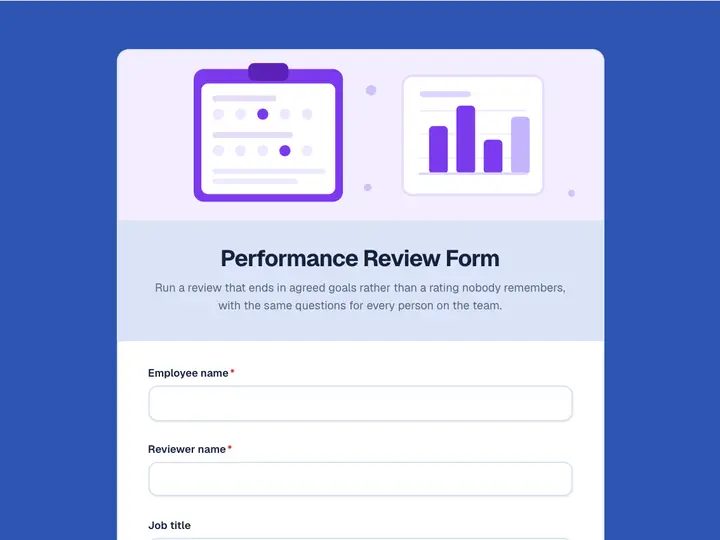 Performance Review Form
Run a review that ends in agreed goals rather than a rating nobody remembers, with the same questions for every person on the team.